Leave a comment

God as the meaning of our lives…

Homily for 3rd Sunday of Ordinary time  (Australia Day 2014)

Our readings and prayers in our masses this weekend are chosen to appropriate our celebration of Australia Day. So we heard of the Prophet Isaiah (32:15-18) a reminder to pursue justice  to achieve peace. We also heard of St Paul to the Romans (12:9-13) reminding us to work for the Lord earnestly, in love, in hope, in generosity and in hospitality. And we heard in the gospel (Lk 12:22-32) Jesus urging us to set our hearts on the Kingdom of God for ‘it has pleased [our] heavenly Father to give [us] the Kingdom.’

God has given so much for this country, and thus it is just fitting that we celebrate this Australia Day, not only as a citizen of this country, but as Pope John Paul II wrote the Church in Oceania in his Apostolic Exhortation in 2001 (Ecclesia in Oceania), we as a Church in Australia are to ponder on God’s  ‘generosity in Oceania and to  his infinite love for its peoples’ and to ask ourselves: ‘How can we fail to give thanks to him from whom every good gift comes?’  (Ecclesia in Oceania par. 53). In other words,  in line with our celebration of Australia Day and to celebrate being an Australian, we are to be mindful that everything we have, and all that we have enjoyed, which obviously not many people in the world have the opportunity to get hold of, are God’s gifts for all of us. And these gifts are not meant to be kept selfishly but to be shared generously to those who have little and to those who have none even. It is part of our mission to remind Australia that it is not by accident that we are called ‘the Great Southland of the Holy Spirit’, but that it is all part of God’s plan for this country. It is our mission therefore, as Christian Australians or as believers and followers of Christ living in Australia, to show to all of Australia that God is the meaning of our lives.

To stand up for God and to show to the world God is the meaning of our life especially in Australia is always a challenge and a test for us. It is a challenge because we need to that  understand life is not just getting what we want, or possessing things we dreamed of, but it is first of all appreciating the gifts we have received. It is a test because there are many things that would take the place of God in our lives.

For instance, for the past couple of weeks, I had these telemarketers chasing me about their product. I knew then they are telemarketers, so I didn’t answer the call hoping that they would get the message I’m not interested in their product. However, they kept on nagging me and chasing me. They know what time is good for them to ring, but not for me. The other day, I got an idea to stop them. When they called me at midday, I answered the phone, then this lady started talking. I said to her: ‘Ok, hold on for a moment.’ I put the receiver near the speaker of my computer. Then I played the music ‘Please release me’ by Engelbert. Then I left the office. When I came back, they hanged up. Thinking that they would ring me again later in that day, I prepared another song ‘I want to break free’ by Queen. I was waiting for them to ring me. But no, I haven’t heard from them since then. It must have worked.

This is just one of the many ways that would take over the place of God in our lives. Things are laid out before us everyday, pushed in front of us, persuading us to believe we really need them when in reality we don’t. So we need to guard our senses, listen to our hearts and let God form the meaning for our existence.

So how we might be able to live out this mission of showing to all the world that God is the meaning of our lives?

One way to live out this mission is offered in our gospel today: that we are to live as a people of faith and as a people with God in our lives. This is quite a challenge because we got everything we need here, or everything we want are just right there within our reach. This easy accessibility to things sometimes lead us to believe we don’t need God and we don’t need faith anymore. But whether we like it or not, whether we admit it or not, we do need God. As Jesus would say in the gospel: ‘Life is more than just eating or clothing ourselves.’ For Jesus, real life is to be a reflection of God in the world- to be a citizen of the kingdom of God, in our way of loving, in our way of promoting peace, and in our way of advocating for justice.

Another way or actually ways, to carry out our mission to show that God is the meaning of our life is offered by St Paul in our Second Reading today. As St Paul urged the Romans, he is also urging us now to love one another, to prefer the good, to be people of hope, to persevere in our prayers, to be generous to one another, and to be hospitable. In other words, we are to be an embodiment of the Spirit of God in love, in hope, in generosity and in hospitality. As the Great Southland of the Holy Spirit, Australia has a lot to learn from these words of St Paul. In many things, this is a lucky country and many people in the world are wanting to experience the joy of being here, that’s why they would rather put their lives at risk just to take that single opportunity to come and live here. However, they are being turned away. This is not a way of Christian hospitality. This is not a way to welcome Christ in the guise of the strangers, foreigners, needy and persecuted, knocking at our doors. But this is what happens. So we must not let these ‘unChristian’ things continue to occur by looking at our hearts, looking at our attitudes towards the needy, the helpless and the persecuted, and by reminding ourselves: “No matter how beautiful this country is, we are not destined to be here forever. There’s nothing we can do to remain here for eternity. This is just like a stopover, an oasis, as we journey on the way to our eternal home in heaven.”

One more way to show that God is the meaning of our lives in Australia is to live simply in the midst of plenty. This calls us to ‘set our hearts on the Kingdom of God’ with trust that God is looking after us for all that we need and all that we are. This also calls us to listen and trust in the words of Jesus in the gospel: ‘I am telling you not to worry about your life and what you are to eat…’ God knows best, and let us allow God take care of it. We just have to trust God and put our hearts in touch and in line to the Kingdom. Yet to live simply is another big hurdle for many because  of the many things being fed on us everyday with a false message that this definitely makes our life worth living, or happy or satisfied. As experience tells us, they don’t. So if those false messages come on our way, let us be cautious of them, discerning and do our best to keep up with our resolution to live a simple life and a life with God. Let us also remember that no matter how rich we are, how much money we have in the bank, how influential or how famous we are, we all have the same size of grave in the cemetery. Even if we buy the whole cemetery, for us to be buried, we can’t occupy the whole place. In the end we can only take as much as 6 ft-deep by 6 ft-long and by 2-ft wide piece of land.

In conclusion, let us continue our celebration for Australia Day, but  let us ask ourselves also:  ‘How grateful are we to God for giving us this beautiful country?’ ‘

As an Australian, am I showing to all the world, and to  Australia, that God meant so much for me, that God matters for me and that faith matters to me?’

Let this be our reflection.


Leave a comment

Be God’s ambassadors

Homily for 2nd Sunday in Ordinary time year A 2014

Last week, when I learned that we would have few very hot days coming up, I was hoping and silently praying that I would never have funerals to officiate. It was a very selfish desire of me, I must admit, but a day with 40 degrees heat or more is just very hard for me. However, as many of you could attest, sometimes our prayers are answered not the way we like it to be. I ended up with 2 funerals, one for a 97 year old and one for an 86 year-old mother. I survived though, even if it was 44 degrees when we got the cemetery for the graveside prayers. Yet, there was something in those days that gave me comfort, the faith of those two women I buried. Such was the impact of faith in their lives that as the son of one of those deceased women remarked as he delivered his eulogy for his mother, “Her faith was the cornerstone of all her values.

They were old women, and their faith sustained them till the end.

Looking at all of you here today too, I could say that there are not many young people around here in this mass. Most are jubilarians I have to be honest. However, I don’t mean this to be a negative connotation, because I believed in the words of my former wise spiritual director in the seminary, that there is a very positive side, in fact worth immolating, in being a ‘jubilarian’ in being an ‘old face’ if you like. This is what he wrote: “For just as young people are so important for any enterprise, to generate energy, enthusiasm and creativity, so are older people- jubilarians- because they are a sign the enterprise is worth giving one’s life to; they are a sign of fidelity. But the fidelity we jubilarians witness to is not ours; it is to the fidelity of Jesus.” He continues, “In other words, the fact that we jubilarians are here together is not a sign of how faithful we have been to our call, but of how faithful Jesus has been to each one of us in calling and accompanying us right up to the present moment.[1]

In a manner of speaking, by getting old and still coming to Church week after week, for many years now, you are DOING the same thing that John the Baptist did in our gospel today. When he saw Jesus, he pointed him to the world. “Look”, he said, “here is the lamb of God that takes away the sin of the world.” In more or less the same way, by your fidelity to the Church and your commitment to attend Mass week after week, is a way for you to show to the world that Christ, that God has been very faithful in his love and care for all of you.

So by the grace of God, please let us keep up being a witness for him in the world. Let us continue to tell the  world of God’s love. Let us continue to tell the world that faith matters. Let us continue to tell  the world by the way we live that God matters.

And to sustain this noble mission and witnessing for Christ, we need to know Jesus more, because  to “know him is to love him, and to love him and is to serve him” to paraphrase a line of Fr Robert Galea’s song ‘To the Ends of the Earth.’ And the more we know Jesus, the more we come to love him, then the more we become his avid witnesses and more loyal to his service.

To know Jesus more personally and intimately we need not try to understand everything about him. He is God, and He is too big to be completely understood. What can we do however is that we can focus on a specific aspect or aspects in the life of Jesus that draws us closer to him or attracts us more to follow him.

For me, personally, there are four aspects in Jesus’ life that draw me closer to him and these have helped me so much to know him more personally and more intimately. I’m sharing this with you with hope and prayers that you will in turn discover his personal invitation to be your personal  friend too.

First, is through his coming as a child– an image of innocence, simplicity and beauty. I would say this certain fondness of the Child Jesus is greatly shaped by one of our strong Filipino traditions of honouring the Holy Child. Every third Sunday of January is the big feast of the Holy Child or the Santo Nino de Cebu, Philippines. Millions of people would flock to honour the Holy Child. Historically, the Holy Infant of Prague was given as a gift to the village chief in Cebu by the Portuguese Explorers and missionaries when they got there in 1521. That, historically was the origin of our devotion and strong affection to the Holy Child.  One explanation of this is that we Filipinos would identify ourselves so much with the Holy Child in terms of his being simple and being raised in a poor human family. We could also reflect on his being weak, his being  vulnerable, and his being in need of care and support as a child. Such is our association and affection to him, that it even seemed we don’t like Him to grow up. We just wanted him to stay a child.

The second aspect that helped me draw closer to Christ is his mother. I am always reminded of the episode in the wedding at Cana. Everyone was busy and enjoying the banquet. But Mary kept her eyes open. When she noticed that the wine was running out, she just couldn’t stand there without doing anything. She knows her Son can do something, so she came up to him and told him of the situation-no-wine. And we know the rest of the story, Jesus made his first miracle then. This showed us that Mary couldn’t just look at us in our need. She would do her best also to help us in anyway by interceding for us to his Son. I could attest Mary’s powerful intercession when I was growing up too. We had this statue of Our Lady of Fatima, going from house to house evening morning at Dawn, while walking in a procession, praying the rosary and singing Marian Hymns. And I could see how much stability and peace our village had enjoyed  since we started our devotion to our Lady.

The third aspect that draw me closer to Jesus is by acknowledging my sinfulness and asking God’s forgiveness always. By acknowledging my sinfulness before God though makes Jesus more real to me because he came to save sinners, he came to save us all. And by this, I come to realize how much God loved me, by coming down from heaven to save us all from our sins. By knowing I am a sinner, I become more acquainted with Jesus in the gospels who are always in search of the lost, and sinners like me.

And the final aspect that draw me closer to Jesus and makes him more real in my life is through helping the poor and needy. By doing the best I can to help others, no matter how much it costs, helped me appreciate more of the abundant blessings of God I have received (in time, resources, skills and abilities) even me without asking them. By doing this, I could also see the living presence of Christ as he identified himself with those who are in need and with those who are poor.

So as we continue our celebration of the mass today, let us reflect on this: Jesus is inviting us to be part of his circle of friends, because in this way, we can know him more and love him more, and be his witnesses in the world today, what is our response to his personal invitation?


[1] Patrick O,Sullivan, S.J.  Prayer and Relationship, pp117-118.

Leave a comment

God’s love breaks through anything…

Homily on the Feast of the Baptism of Jesus 2014

god-4One of the great privileges of being a priest is to witness two people in love who have decided to celebrate that love in the context of marriage in the Church. It always fascinates me to see a particular man and a particular woman from among many out there who have ‘fallen’ in love and wanted to live in that love together, despite differences in personalities, expectations and at times in age even. ‘Age doesn’t matter’ when it comes to love,  has become a common cliché. It is so because ‘love is blind’ as we sometimes say or ‘love conquers all’, as I always realize every time I officiate weddings. It is just an amazing thing to see what love can do despite everything, despite apparent barriers and despite possible obstacles.

Once, I was talking to someone who is certainly in love with a woman, a widow, aged almost double his age and has children to rear. He was concerned about what people think or say about their relationship. So I said  to him: ‘Stand up for your love. Show to all that your love to each other is sincere. Don’t be bothered by what people say or think of you. Whatever they think or say of you two is none of your business.’

You might wonder why am I talking  about love and marriage here when we are celebrating today the feast of the baptism of the Lord. Well, I just want to illustrate a point that LOVE can do great and unthinkable things. ‘Love conquers all indeed and it is willing to break through any barrier.

And this is really evident in the episode in our gospel today of Jesus’s baptism by John.  See John’s baptism was for the repentance and remission of sins, that’s why John had expressed a bit of reluctance in baptising Jesus. ‘It is I who need baptism from you,’ he said to Jesus. ‘and yet you come to me.’ Jesus had no sin, so He doesn’t have to be baptised. Yet, echoing the kid’s question last Sunday when I baptised his younger  sister: ‘Why  did you that to her?’, we can also ask Jesus why would he go for baptism when he has no sins at all and thus he needs no repentance?

Why would Jesus dare to do so?

Because that’s how serious God’s love is for us that he would take the risk of identifying with our human condition, even willing more  to be associated with our sinfulness. This is how seriously in love He is that He humbled himself and be baptised. He wills to do this to show us that He is serious of his mission to save us from sins by identifying in a special and intimate way with our sinful condition not by sinning but by identifying with our sinful condition in an more intimate, personal and mysterious manner.

Hippolytus of Rome, one of the Early Church Fathers, has put the significance of Jesus’ baptism most beautifully. He wrote: ‘If the Lord had yielded to John’s persuasion and had not been baptized, do you realize what great blessings and how many we should have been deprived of? Heaven was closed after then; our homeland on high was inaccessible. Once we had descended into the depths we were incapable of rising again to such lofty heights. The Lord was not only baptized himself; he also renewed our fallen nature and restored to us our status as God’s children. At once the heavens were opened to him. The world we see was reconciled with the world that lies beyond our vision; the angels were filled with joy; earthly disorders were remedied; mysteries were revealed; enemies were made friends.

Because of his love for us, God is willing to take the extra mile, the extra burden, the extra cost, and even the whole cost of our sinfulness, by the words and by the works  of Jesus Christ.

However, God’s love is not meant to be a one-way traffic. Jesus himself would stress this when he was asked about which is the greatest of the commandments, he said: ‘And you shall love the lord your God with all your heart, and with all your soul, and with all your mind, and with all your strength.’ [Mk 12:30] This is an invitation for us to respond to God’s love, to love God back so as to establish that real, personal and intimate relationship with Him.

And the Good News is that through Jesus and by learning from him, we can love God back. For this love to develop and grow, we just need to listen to Jesus– the Beloved Son, whom God favour rests. [cf Mt 3:17]

Listening to God’s Beloved Son means opening our minds and our hearts, and all our senses to the presence and the workings of God in our lives, in our experiences, in the events in the world. This also means giving back to God his favourite space in our lives- our hearts.

If we listen to Jesus today, we could hear his voice so strong – as a refugee calling for asylum, because their lives, livelihood and fundamental rights are threatened if not neglected and cast aside. Jesus’ voice is also very loud in the voice of the innocent civilians and children in  Syria and in Central African Republic being caught in the middle of war, violence and conflict.

If we listen to Jesus we could hear God calling us now as his Beloved sons and daughters too. And this calls for a mission that we share this love to others, especially to those who haven’t heard of him, or haven’t felt loved at all, or being alone, or being desperate. And inspired  by the words of the prophet Isaiah in our First Reading today (Is 42:1-4;6-7), we share God’s love to others tenderly, ‘by not breaking the crushed  reed’ (i.e. not harsh, not rash, no arrogance or pride, and not for personal gain) and ‘not quenching the wavering flame’ (i.e. carefully not putting people off by imposing our own self and personal agenda,  but by helping others rediscover the beauty of faith and the beauty of God.)

So as we continue our reflection on the baptism of Jesus, let us resolve to do something during the week that enables others to see and/or experience the love of God in and through us. It might just be a simple phone call to person we haven’t spoken for a while, or helping an old lady push her trolley of grocery in the supermarket, or visiting a person we know who is in the nursing home, or bringing your children as you do voluntary work at St Vinnies, or calling in at your neighbour living alone for a cuppa. By doing this and thousand other ways we are spreading the message that everyone is God’s beloved son and daughter too, and that as Peter would say in our Second Reading today: God has no favourites, and I would add, because we are all special and worth dying for in God’s eyes.

Let this be our reflection and a point for resolution. Amen.


Leave a comment

The Counsel of the Wise Men

Homily for the Solemnity of the Epiphany of the Lord 2014

wise menOur former spiritual director in the seminary in Melbourne is a wise Jesuit priest and a man of few words. Yet no matter how few or how little he had to say, there is always something to reflect on from his short and simple catchphrases. One example of this is his comment about being wise. He said: ‘Some people are wise, some are otherwise.’

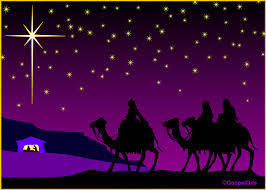
This catchphrase came back to me as I reflect on the Feast that we are celebrating today- the Epiphany of the Lord or the manifestation of the Lord to all nations. This epiphany is being represented today in our gospel by the wise men from the East who came to see the child Jesus, paid homage to him and offered him gifts of gold, frankincense and myrrh. Some traditions would even call these wise men- three kings, and they had names too: Melchior, Gaspar and Balthazar. But it doesn’t really matter if they are kings or not. What matters is that they showed us the truth that God manifests himself to everyone. This episode of the wise men visiting the child Jesus present  a good news for us- that God has come for all of us, no matter where we come from, what language do we speak, what culture do we belong to, or where we are in the social ladder. How amazing really is our God! He is such a loving God revealed by Christ. that St Paul could proudly preach that in Christ, ‘there is no longer Greek or Jew, circumcised and uncircumcised,  barbarian and Scythian, slave and free, but Christ is [for] all and in all.’ (Col 3:11). St Paul would also say that in Christ Jesus, even gentiles ‘now share the same inheritance, that they are parts of the same body and the same promise has been made to them.’ (Eph 3:5-6).

To realize that God has come for each one of us, not just for a selected few, or for a particular group of people is really a moment of liberation- a good news for us. But this is not enough for us just to know this, just as it is not enough for us to say we believe in God and without doing anything to live what we believed. In here we need to distinguish between knowledge and wisdom. Knowledge is knowing that tomato is a fruit. Wisdom tells us that we can’t put tomatoes in our fruit salad. ‘It is one thing to say that we have  our answers in the person and teaching of Jesus’, says Francis Moloney, A Scripture scholar, ‘It is another to live lives which shows such answers to be true.’ This means that we need to open our hearts to the manifestations of God in our lives. We need to meet God halfway. And to realize this, we need wisdom to embody in our lives what we know about God. We need the wisdom like that of the wise men to help us live our lives in cooperation with God, with His will and with his plan for us.

What can we learn from the wisdom of the wise men then?

First, they looked up to a certain star, studied it, and upon realizing it is a sign to a divine, they followed it. Traditions would say these men were astrologers- they knew how to interpret some signs from heaven. They have understood that there is something deeper that the star was pointing to. They have realized it is a sign that could lead them to the new-born king of the Jews- the God-made-man. With this knowledge they went off to search for God. Through the star, they were able to find the place where Jesus was born.

In our lives too, we have stars that we looked up to and follow. We have sports heroes, model philanthropists, idol celebrities, particular historical figures, community leaders, parents, siblings, neighbours, and whoever we follow. Like the wise men, we need to discern if these stars are leading us to Christ, to God. If our ‘stars’ though shining brightly, are not leading us anywhere closer to Christ, then we need to look for another one. We need to go through another way. We need to remember also that ‘stars’ couldn’t save us. But with wisdom, we can learn from them a way to encounter Christ, our saviour, they can point to us the way to salvation.

Second, the wise men, wise though they were, didn’t hesitate to ask questions from the people who knew more of the Tradition. ‘Where is the infant king of the Jews?’, they asked. Presumably, they would have inquired this from the scribes and Pharisees- those who are knowledgeable of the scriptures, those who knew more of the prophecies about the coming Messiah.

What does it say to us? Intellectuals they may be, the wise men humbled themselves by acknowledging that they didn’t know everything. In the real sense of the word, a wise person is not one who knows everything, or pretends to know so much, but someone who knows where to search for things, whom to go and ask for, and knows how to keep silent if he/she has nothing to say.

The gospel tell us that the wise men came from the East, so they must have very little or even no knowledge about the tradition of Israel. They acknowledged this limitation by going to the source and by asking from those who know more about the tradition. This is a call for us to acknowledge and humble ourselves that we can’t just rely on what we know without going back to the community where the tradition is being kept, cherished and  sustained. As a Christian then, we are to realize that we are only half-baked Christian if we claim to be of Christ yet we distanced ourselves from Christian tradition. In other words, we are missing the plot if we say ‘I believe in Christ and I don’t need to go to Church- the guardian and the keeper of the Tradition. Thus, we need  to humble ourselves and go back to our community, to our Christian tradition, to learn more, to understand deeper the meaning of who we are as a Christian and as a follower of Christ.

Third, the wise men opened their treasures as a gift to the Holy Child. They offered him gold, frankincense and myrrh. These are special gifts, but they didn’t hold them back for themselves. They gave it all to the child Jesus. This could teach us to be grateful to God for all the blessings he has poured on us. This invites us to give back to God that which is due for Him.

Fourth, the wise men went back to their own country by a different way. This could mean conversion. This is best put by a Christian writer (Philip Yancey) when he said: ‘No one who encounters Jesus remains the same.’ We have heard in the gospel Herod met them privately and told them to come back to him once they found the child. As a King, he could do anything he wanted and that includes having these wise men killed if they wouldn’t follow his order. Yet, wise as they were, they  preferred to listen what God had to say (being warned in a dream not to go back to Herod) over what Herod had told them to do. It’s a daring move but in their wisdom, they couldn’t do otherwise.

Today, there are many Christians especially in the middle east deciding to go by a different way by standing up for Christ, and for the Church, rather than listening to the threats of  some radical groups  in the country they’re in. Like the wise men, they dared to go against the current. Many of them have been martyred. Let us pray for them as well as let us imitate their way of witnessing the Christian faith even if brings out a threat for their lives and livelihoods.

So as we continue reflecting on this feast of the epiphany of the Lord to all nations, I leave you with a couple of  questions:  

‘If we were with the wise men looking for Jesus, what gift are we bringing for him?’

‘Now that we have encountered Christ by baptism and through the Eucharist, what impact does he have in our lives?’