Leave a comment

Attitudes of Waiting for the Lord’s coming

Homily for 19th Sunday in Ordinary time year C

waiting for the LordFor me, one of the highlights for World youth Day celebration in Rio de Janeiro is the opportunity to see Pope Francis in person. So on the day Pope Francis was to arrive at Copacabana beach we were full of excitement and expectations of him. While waiting, we even joked about him coming via jet ski or by a wooden boat. That didn’t happen of course. Anyway, I tried to find my way into the crowd rubbing shoulders with thousands others who were all wishing to get close enough to the Pope when he passed by in his pope mobile. Like all others I had my camera ready to take a snap of Pope Francis when I had the chance. While waiting expectantly, we were also observing some signs of the Pope’s coming. So when we heard the siren of the police cars, the choppers  buzzing around and the coastguards moving in closer to the beach, we knew that Pope Francis was on his way. So we started to press into the crowds again and rub shoulders with each others. But unlucky me, I didn’t have the chance to get any closer to him because as he got closer and closer to where we were, people started to outdo each other taking photos of the Pope or just wanting to see him in person or if lucky shake his hands even or just touch the ‘hem of his vestments’ so to speak. So I  just backed off and offered a silent prayer hoping that this spirit of eagerness, excitement and expectant waiting of the Pope’s coming would be the same spirit that we have as we wait for the second coming of Jesus. But then I noticed another remarkable thing that made me stop and think again. There were some people there mingling with the crowd of pilgrims selling stuff such as water, refreshments, even chairs for the people to sit on while waiting, and some cardboard boxes hard enough to stand upon to get a better view of things happening around. That image just remained in me because it portrayed a direct contrast to the attitudes shown by most people there. While we pilgrims were trying to get a better position to see the Pope, with our cameras ready, hoping to get a good shot to show to our friends later on, these ambulant vendors were in a way serving the pilgrims by providing them with means as we were waiting. I am  just amazed by the initiative of these people to blend into the crowd  and thinking ahead what we might need or want as we wait.

I’m sharing this with you my dear brothers and sisters because this particular scenario presents a rich and various attitudes of people waiting for the arrival of someone. Some attitudes are focused more on the self and less concerned for others. Some attitudes present a heart and a mind for others. Some attitudes are just being indifferent to the situation. Those attitudes might just be acceptable in Copacabana beach, but some attitudes would need to be sorted out if we are waiting for the coming of the Lord.

Having the right attitude of waiting is one of the strong messages for us in the  gospel today. Jesus in our gospel would urge us that we must wait actively, faithfully, and patiently and that we must be always ready when he comes. So he said: “See, that you are dressed for action and have your lamps lit” (Lk 12:35). Yes, while waiting for the Pope, we were active, we were patient to one another and we didn’t care how long we have to wait because we knew that the Pope is certainly coming on that day, at that particular time and in the particular place. So after seeing we could say: ‘It’s worth the long wait.’ But waiting for the Lord’s coming is a challenge we have to take on. It needs patience and it calls for our fidelity because ‘we don’t know when he is coming, or where from, and where is he appearing. Jesus is only telling us to be always prepared at all times. He is calling us to imbibe in us the right attitude we need to develop as we wait in hope for his coming.

Reflecting on our readings today we can learn to develop three attitudes or three ways by which we can take to help us as we wait for the Lord and to help us prepare for the coming of Christ.

First is to have the attitude of a person of faith. This attitude presents itself in the person who always has God as the source, the power and the meaning for his/her existence. This attitude is evident in the person who allows God to be part of his/her daily work, maybe at home, at school, at workplaces, everywhere. But it is a call more than just being a person of faith. It calls us to keep up with our faith. Faith is a very important element in our Christian life especially as we wait for the Lord’s coming. ‘Only faith can guarantee the blessings that we hope for’, says the author of the letter to the Hebrews that we heard in our second reading today. It is faith, that ‘proves the existence of the realities that at present remain unseen.’ (Heb 11:1-2). It is faith that gives meaning to our being a Christian. We may at times feel like losing faith or that our faith is fading, or becoming less relevant in our lives and in our world, but still let’s keep it up. Let us pray for an increase of our faith instead just as the disciples asked Jesus to increase their faith (Lk 17:5). ‘Let us put on faith’, Pope Francis would say ‘as we put on salt in our food and our lives will take on a new flavour.’

Another attitude of expectant waiting for our Lord’s coming is the attitude of simple living and generous giving. First of all this entails a lifestyle check. Jesus said in the gospel: ‘Sell your possessions and give alms. Get yourselves purses that do not wear out, treasure that will not fail you, in heaven where no thief can reach it and no moth destroy it’ (Lk 12:33). This calls us to have a look at our lives. Are our possessions and concerns helping us to be in a right and personal relationship with God and with one another? If yes, let’s keep them. But if they are only focused for our selfish motives and ambitions, they need changing, they need sorting out, they need going beyond ourselves, they need going out of our comfort zones, they need replacing of a treasure worthy of heaven.

One other attitude to help us prepare for the second coming of Jesus is fidelity to the job we are given. When we are baptised and confirmed, we have been anointed by the oil of Chrism and that anointed us to be sharers in the three-fold ministry of Christ- i.e. Priestly, prophetic, and kingly.

As sharers of the priestly ministry of Christ we are to offer worship to God as part of our daily life. Prayer is one way to do this. As a sharer with the prophetic work of Christ, we are to proclaim the gospel, the Good News to all nations. It doesn’t necessarily mean going out to the ends of the earth and tell the people about Christ. By “all nations” means including our immediate surroundings, our families, our workplaces, our schools, our society. As a sharer with the kingly work of Christ, we are to be a service to one another. This means also serving the poor, the needy, the sick, the elderly, the lonely, the abandoned, the homeless and helping them recognize their inner dignity and worth once again as sons and daughters of God, as brothers and sisters of Christ.

So as we continue our celebration of the mass today, let us ask ourselves: ‘Are we having the right attitude as we wait for the coming of the Lord?’ Let us make this our prayer, let us ask the intercession of our Lady that like her we may offer ourselves and have the attitudes of selfless service to God.

Leave a comment

Living life to its fullness

Homily for 18th Sunday in ordinary time year C 2013

Campus fideiMany of you might have heard of or seen the events of the World Youth Day held last week in Rio de Janeiro in Brazil. You might have seen footage of the famous Copacabana beach filled with people. I was there. You might not see me but I was one of more than 3 million young people from all parts of the world participating in the celebrations led by Pope Francis himself. But the final mass which was on Sunday that you might have seen or followed through the internet wasn’t originally planned to be at Copacabana beach. The Church had allocated another place for it. It was called Campos Fidei or ‘The Field of Faith’. However, the World Youth Day organizers had to make a last-minute decision on Friday not to have the Vigil there on Saturday night and the Final Mass on Sunday for the reason that it was being flooded. It was a disappointment for many because it took a lot of time, a lot of resources, a lot of effort to set up  and a lot of people to design and to build. Not only that, the place was beautifully surrounded by mountains. The design was beautifully created and the templete and the altar was amazing.  But what somehow consoled me and I believed for many others too, was Pope Francis’ comment on the change of the venue. The Pope  said words to this effect: ‘We might not be at Campos Fidei, but it doesn’t matter, because the real Campos fidei, the real field of faith is our heart.’
I just loved this comment of the Pope because it’s true. The true  field of faith is our heart. This Sunday Jesus in our gospel, calls us to have a closer look at our field of faith. He is inviting us to make an assessment of our hearts and to ask ourselves: ‘What are our priorities’ and ‘What do we value more than anything else’?

In our gospel today, a man went to Jesus and asked him to act as a rabbi and serve as an arbitrator between him and his brother regarding their inheritance. Jesus however, didn’t just give in to the appeal. ‘Who appointed me your judge or the arbitrator of your claims?’ he asked the man. It doesn’t mean that he doesn’t care. It doesn’t mean that he’s insensitive. He just wants to direct the man to sort out his priorities and the things he  values in order for him to live a truly human life and also to be assured of eternal life. He just wants to help the man realize that the conflict between him and his brother is not just a matter of who owns what but it is basically an issue of what caused the conflict- that is the desire to have more…Jesus wishes his audience that the desire to have more possessions and more security in this world and in this life is not the way to live a truly human life.

On deeper reflection of the gospel, we could see that Jesus is offering us two basic ways  to live a truly human life and to live worthy of eternal life.

First is that to live a truly human life is to go beyond ourselves. It is a big call for us today. It is quite a task to accomplish because it means getting out of our comfort zones and help others, especially the poor and the needy. This means we need to re-assess our sense of security. We need to ask ourselves not only ‘how much savings we have’, but ‘why do we keep saving them?’ When we could honestly ask this question to ourselves, we could hear Jesus telling us in our field of faith: Life is not just about what we own or possess now but rather it  is about how we give and share them to others.  This calls us to go out there empowered by the love of God and motivated by love with our neighbours. If we do this in love, we don’t count how much it would cost us or even what does it cost us. If we go beyond ourselves, we let God take over our lives by allowing him to be his instruments of his love and care for others.

Yes, it is a difficult and challenging path but thank God for the examples of the saints, we know it is not impossible. We just have to imitate the example of Mother Teresa who found the way to live her life to its fullness by serving God unconditionally through serving the poor, the needy and the marginalized in her society. Mother Teresa couldn’t do all that if she took the credit to herself. But because she went beyond herself, because she put aside all her personal ambitions and interests and let God make her an instrument of his love, she became a beautiful model of Christian service. Christ became her life, her power and her source of strength, that she could only see herself as a mere instrument of God’s love and care for the sick, the needy and the poor. This resonates loudly in one of her beautiful sayings: “I am a little pencil in God’s hands. He does the thinking. He does the writing. He does everything and sometimes it is really hard because it is a broken pencil and He has to sharpen it a little more.

The second way to live our lives to its fullness is to go beyond this world. St Paul would help us find a way to be able to realize this in our lives in his words to the Colossians in our Second Reading today.  Paul wrote: “Since  you have been brought back to true life with Christ, you must look for the things that are in heaven, where Christ is…Let your thoughts be on heavenly things, not  on the things that are on the earth…” This means we are not to be content on self-preservation now. This means we are to strive living for eternal life, the life after this earthly life we have. This means we have to long for heaven. This means we need to remember always that we are just pilgrims on this earth. Our true home is in heaven. Jesus is inviting us in our gospel today to realize this and to make this our resolution even, to stop storing up treasures for ourselves and begin to make ourselves rich in the sight of God.

And how we might respond to this invitation of Jesus?

We go back to St Paul’s letter that we have just read in our Second reading today as a way to take up with this resolve to be rich in the sight of God. St Paul wrote: ‘That is why, you must kill everything in you that belongs only to earthly life: fornication, impurity, guilty, passion, evil desires and especially greed…’

So as we continue our Eucharistic celebration today, let us ask ourselves: ‘How are we living our lives now? To answer this, I leave you with a bit of a homework to do. When we go home today let us try to make an inventory of our lives. Let us just begin by asking ourselves: ‘What are the ten things in my life, I can’t live without?’


2 Comments

Who am I as a neighbor?

Homily for 15th Sunday in Ordinary time year C 2013

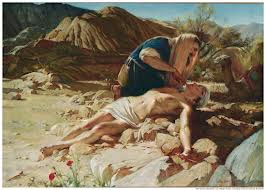
good samaritanFew weeks ago, I went to the doctor to have my injections as part of the requirement for the trip overseas. I had three shots and the doctor (an Egyptian man) said it would cost a significant amount. However, the doctor told me to pay only whatever I could afford to pay. When the injections were done, I went to the counter to settle my account but I was told: ‘Don’t worry, it’s all being taken care of.’ Apparently the doctor had decided that I wouldn’t have to pay for it. He just asked me to pray for him and to buy an image of Jesus for him from Brazil.

I can’t help but share this with you because this experience is a proof that God’s word is really living an active in our world today, in our own time. The gesture of the doctor to cancel the cost of his service and of the injections is the modern version of the story of the ‘Good Samaritan that we heard in our gospel today. This assures us that the story of the good Samaritan is not only a parable that we can hear from the gospel. It is rather, a real thing and it is happening all around us here. Some of us here today have even experienced that, when some parishioners went to your homes, picked you up and brought you to the Church. This is just one assurance for us then that there is more hope in the world than despair. This tells us that there is more meaning in life than getting what we want or preserving ourselves. This goes to show us that we have ‘neighbours’ still who care for us in our needs and in our helplessness. But this is not only a question of ‘who is our neighbor?’ It is also a question of ‘who am I as a neighbor?’

This is a challenge for us in this 15th Sunday in Ordinary time: ‘How are as a neighbour? Are we doing well towards our neighbors? What is our attitudes towards our neighbors?

I hope our answer would not be like the answer given by a friend when I asked how he’s going when he said: ‘I did nothing in particular, and I am doing it very well.’

To answer the questions above, we need to go back to the gospel and reflect on the attitudes of the characters in the parable.

The first attitude Jesus wants to tell us is the legalistic attitude. This is the kind of attitude of the people who would say: ‘If I just listen and obey what is written in the law, I will be alright.’ Having this attitude however, would not get us far into human relationship. It is so limited because the primary point of reference here is not the person or personal relationship but rather the law and what it says. This limits our perspective and our initiatives. But this is the attitude shown by both the priest and the Levite in the story. The priest is on his way to offer worship in the temple. The law says that if he got in contact with a human blood or a corpse for that matter, he would become unclean and thus unworthy to do service in the temple. He has to undergo ritual cleansing again to be able to resume his  temple duties. It is the same thing with the Levite. The Levites are temple assistants. They assist the priest in ritual and worship. They change the oils in the lamps, etc. He was on his way to the temple too. So if he would stop and attend to the bleeding and the dying man, he would be made unclean and thus unable to continue his usual temple duties without proper cleansing. So  like the priest, off he went, revealing more of a selfish, insensitive and uncaring person he was. This kind of people generally live out their lives with the question: ‘What’s going to happen with me if I would  stop and help?’ Jesus had to remind us that this is not the way we are supposed to be if we live as a neighbour to one another.  Jesus is telling us to understand that there is more to the law than what it says. He is telling us that the spirit of the law is far more important than the letter.

The second attitude that Jesus wanted to show to us by telling the parable is the attitude of a good neighbour. We can see this attitude in the way the Samaritan man came to the rescue for the unfortunate man left half-dead on the road. We can see what a neighbour is like according to Jesus. A good neighbour comes to the rescue if someone is in need regardless of the person’s background, culture, identity or nationality. By telling the story, Jesus wants to present the point that being a neighbour must transcend even cultural conflicts and cultural prejudices. We have to note here that the Jews and the Samaritans considered themselves ‘mutual enemies’ for some reasons. Furthermore Jesus is telling us that a true neighbour offers help and shares whatever resources he/she has to help others. The Samaritan gave two denarii to the innkeeper as a payment for the accommodation if you like and even promised the owner: ‘Look after him, and on my way back I will make good any extra expense you have.’

We can call this attitude a Christ-like attitude. And what is this attitude? It is a loving, caring, being sensitive to the needs of others, taking risks, going into the spirit of the law rather than letter of the law, not expecting payment, investing more for the sake of others, and even using some of the personal resources to help others. People with qualities like these generally live out their lives with the question always: ‘What’s going to happen to this person if I don’t stop and offer help to  him/her?’

To finish the parable, Jesus invites all of us to ‘go and do the same’ as the good Samaritan did to the man on the way to Jericho. To carry out this mission we need to transcend ourselves and to go beyond our personal interests and ambitions. To realize this mission in our lives we need to focus on Christ himself- the good Samaritan, who took the risk of crossing boundaries, of bridging cultures, and uniting different groups of people, by stopping by and helping us up as we lay there ‘half-dead through our sins’ on the road to life. Christ has done it. He is calling us to ‘do the same’. So this must be our resolution and our prayer. Amen.


Leave a comment

How committed are we to Christ and the gospel?

Homily for 14th Sunday in Ordinary time year C 2013

Hierarchy-of-CommitmentOn my way back to Australia from the Philippines, I went through  Singapore. I had to wait for six hours in the airport for my next flight to Australia. It was a long and boring wait. So to break the boredom of waiting, I started a conversation with another passenger, a Filipina on her way to the middle East. After introducing myself as a Catholic priest, she was taken aback and said that she is an adherent  to the Islamic faith. Out of curiosity, she asked me: ‘As a priest, you are not allowed to marry, are you?’ I said: ‘Not in the Roman Catholic Church.’ She added: ‘But you’re still human, and you are still attracted to beautiful people, aren’t you?’ I said: ‘Yes, absolutely, but my case is no longer a matter of human attraction or of my being human, it is already a matter of commitment.’ Then I asked her in return: ‘As a married person, you’re still attracted to other people, are you?’ She affirmed. Then I continued: ‘But you can’t just get carried away by your attraction because you are already committed to someone. Are you? In the same way, my commitment is a Catholic priest. This is my ground, this is my foundation on which  I always come back to every time I do something, I feel something, or even in the way I carry out myself.’ She seemed convinced and said she’d remember my explanation from that moment on.

Dear brothers and sisters, I’m sharing this with you not only because it is story of commitment but also because our gospel today and in fact the gospels read for the last two Sundays are all about commitment- a commitment to follow Christ. On the twelfth Sunday for instance, Jesus noted that if we commit ourselves to following him, we are to expect that we have cross to carry as we follow him. Last week, He urged us that if we commit ourselves to follow him, then we must strive not to turn back to our old way of life or to whatever we have left behind. ‘We are a new creature now in Christ, and this is what matters’, as St Paul would tell us in our Second Reading today. And in today’s gospel, Jesus tells us that if we commit ourselves to follow him, we are to strive to overcome all unnecessary baggage and obstacles, trials and challenges in our way to discipleship. He is inviting us to live simply, carry out our mission faithfully and bring the message of peace to others.

By virtue of our baptism we have committed ourselves to Christ and the gospel. This means that to be true to our Christian baptism we are to work like Christ, we are to work with Christ and we are to be with Christ. To be able to do this, let us listen to St Teresa of Avila (1515-1582) as she put it rather beautifully in her poem Christ Has No Body. She wrote: ‘Christ has no body but yours, No hands, no feet on earth but yours, Yours are the eyes with which he looks compassion on this world, Yours are the feet with which he walks to do good, Yours are the hands, with which he blesses all the world. Yours are the hands, yours are the feet, Yours are the eyes, you are his body.

This is a way for us to honour our commitment to God and make Christ our firm and solid ground in our service to God and to our neighbours. ‘Apart from him, we can do nothing’ [Jn 15:5].

However, let us always remember, Jesus didn’t promise us a smooth-sailing journey, a cost efficient mission and a really productive endeavour. Instead he is  warning us that there are always people, things and circumstances that would help create opposition and resistance against the message of the gospel that we bring. There would be ‘towns that wouldn’t welcome us and the message of peace that we bring.’ But we must keep up. We must not get carried away by discouragement and despair. We must keep up rather, with our commitment to Christ because we are not promoting ourselves here. We are not doing this to put ourselves in the front, so I hope and pray. We are bearing the marks of Christ in our lives, St Paul would say to us in our second reading today. We are doing this for the Kingdom of God.

Sincerely, I thank you all for being here today. By coming here today to celebrate our faith together is a concrete example that we are serious in our commitment to Christ and his gospel. Thank you for your commitment to come here in this mass, to show to the world that God matters, to show to the world that Christ is real in our lives and that we need him. Thank you for your commitment to Christ.

But this commitment demands more of us. Let us make this commitment to him our ideal to which we look up to and renew everyday in our lives. If we do this, then no amount of criticism, pessimism or cynicism can tear us apart because we are standing on the firm and solid foundation- Christ and the gospel.

This year Pope Francis is going to canonize two important figures in our Church whose commitment to Christ resonated in the way they lived up their lives and in the way they led the Church. Pope John XXIII convened the historic Second Vatican Council  through which we come to see the beauty of the Church from all perspectives. Pope John Paul II showed in his leadership the beauty of unwavering commitment to Christ and his Church. We can learn from the examples of these two great figures in the Church, the beauty, the grandeur and the prize of unwavering commitment to Christ and to his Church by faithfully and prayerfully renewing our commitment to him everyday till the end of our earthly life.

So as we continue our celebration today, let us ask ourselves: How committed are we to Christ and the gospel? Is Christ now our ground, our foundation upon which we come back to and lean back on when things or people, trials and problems become obstacles and hurdles for us in our way to discipleship? Let this be a point for our prayer and resolution from this day on.