 Two weeks ago, the film
 Jesus Washes his disciple’s feet: A Reflection
 This episode places Jesus disciples at table before the feast of the Passover. Matthew, Mark & Luke record that Jesus is breaking the bread, John presents Jesus washing the feet of his disciples.
The Church celebrates this ancient tradition again, attested to by the Scriptures, that Jesus came to serve and not to be served. The priest who enacts this therefore, renews his priestly vows of serving the people of God, in his utmost capacity. It’s a demanding and humiliating responsibility indeed, but to follow Jesus is to commit ourselves to follow him, especially in serving his people.
Jesus said to Peter, “If I washed your feet, I who am ‘teacher’ and ‘Lord‘, then you must do the same.” There is however, another side of this story. If dropping on our knees and washing the other people’s feet calls for humility, it also calls for humility to have our feet washed by the person who is in a higher position than we are.
Offering our feet to be washed means that we are relying on other people, to help us, to assist us, to guide us, to carry us. But this is not always the case for us, since we, always tend to have control in every situation, that we all have the necessary means we need to survive. But, our experience also tells us that this is not always the case. There are just times in our lives when we couldn’t do anything, when we felt helpless, and dependent of another.
Then we project our attitude of being in control of ourselves, to our relationship with God, to the extent that we no longer allow God to be God in our lives. Experience tells us that there are times when we only call God, or go to God, when we really need something, and we want it done for us. It seems like God is an Automated Teller Machine, that when we need cash, we just enter our PIN and here we go.
The message that Jesus wants to impart on us today is to be humble enough, to let God be God, in our lives, and to acknowledge that we just couldn’t do much on our own without the generosity and love of God.
A Good way of looking at the Mirror
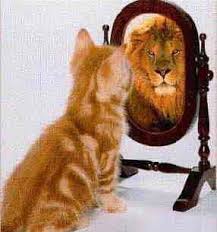 The more time you spend feeling sorry for yourself, the more things you’ll have to be sorry about.
If you insist on seeing yourself as a victim, you’ll end up experiencing your life as a victim.
It doesn’t have to be that way. Because you can choose
right now, and every day, to see yourself in a positive,
empowering light.
The way you see yourself is up to you. It doesn’t have
anything to do with the circumstances you happen to be
facing.
See yourself as the unique, beautiful, creative and effective person you know you are. See yourself as a bundle of positive, inspiring and meaningful possibilities that are well on their way to being fulfilled.
See that you are able to successfully handle whatever life
sends your way. See that you are able to thrive and grow and make positive meaning out of the world in which you live.
See yourself as constantly moving forward through it all,
with love and joy and purpose. And what you see, you will
Be.
~Ralph Marston~
The Great Sacrifice
“Japanese boy teaches a lesson in sacrifice”
EDITOR’S note:
THIS letter, written by Vietnamese immigrant Ha Minh Thanh working in Fukushima as a policeman to a friend in Vietnam , was posted on New America Media on March 19. It is a testimonial to the strength of the Japanese spirit, and an interesting slice of life near the epicenter of Japan ‘s crisis at the Fukushima nuclear power plant. It was translated by NAM editor Andrew Lam, author of “East Eats West: Writing in Two Hemispheres.” Shanghai Daily condensed it.
Brother,
How are you and your family? These last few days, everything was in chaos. When I close my eyes, I see dead bodies. When I open my eyes, I also see dead bodies.
 Each one of us must work 20 hours a day, yet I wish there were 48 hours in the day, so that we could continue helping and rescuing folks.
We are without water and electricity, and food rations are near zero. We barely manage to move refugees before there are new orders to move them elsewhere.
I am currently in Fukushima , about 25 kilometers away from the nuclear power plant. I have so much to tell you that if I could write it all down, it would surely turn into a novel about h uma n relationships and behaviors during times of crisis.
People here remain calm – their sense of dignity and proper behavior are very good – so things aren’t as bad as they could be. But given another week, I can’t guarantee that things won’t get to a point where we can no longer provide proper protection and order.
They are humans after all, and when hunger and thirst override dignity, well, they will do whatever they have to do. The government is trying to provide supplies by air, bringing in food and medicine, but it’s like dropping a little salt into the ocean.
Brother, there was a really moving incident. It involves a little Japanese boy who taught an adult like me a lesson on how to behave like a h uma n being.
Last night, I was sent to a little grammar school to help a charity organization distribute food to the refugees. It was a long line that snaked this way and that and I saw a little boy around 9 years old. He was wearing a T-shirt and a pair of shorts.
It was getting very cold and the boy was at the very end of the line. I was worried that by the time his turn came there wouldn’t be any food left. So I spoke to him. He said he was at school when the earthquake happened. His father worked nearby and was driving to the school. The boy was on the third floor balcony when he saw the tsunami sweep his father’s car away.
I asked him about his mother. He said his house is right by the beach and that his mother and little sister probably didn’t make it. He turned his head and wiped his tears when I asked about his relatives.
The boy was shivering so I took off my police jacket and put it on him. That’s when my bag of food ration fell out. I picked it up and gave it to him. “When it comes to your turn, they might run out of food. So here’s my portion. I already ate. Why don’t you eat it?”
The boy took my food and bowed. I thought he would eat it right away, but he didn’t. He took the bag of food, went up to where the line ended and put it where all the food was waiting to be distributed.
I was shocked. I asked him why he didn’t eat it and instead added it to the food pile.
He answered: “Because I see a lot more people hungrier than I am. If I put it there, then they will distribute the food equally.”
When I heard that I turned away so that people wouldn’t see me cry.
A society that can produce a 9-year-old who understands the concept of sacrifice for the greater good must be a great society, a great people.
Well, a few lines to send you and your family my warm wishes. The hours of my shift have begun again.
Ha Minh Thanh
One more thought –
“We are still hoarding black money” – We require not one Gandhi or Hazare but thousands of them!
nidokidos
 Junjun FAITHBOOK