
Experiencing God’s love and mercy
Homily for 28th Sunday in Ordinary time year C 2013
 A month after I and two other friends first arrived in Australia, we joined Corpus Christi seminary in Melbourne. We were introduced to the seminarians, and I was happy to see the mixed crowd there, I mean the mixture of nationalities in the seminary- Vietnamese, Filipinos, Korean, Italian, Indian and Australians of course. I thought, I could blend in with them then if these other nationalities can. However, I found it hard at first because there was very little done for the other seminarians who are none-Australians so it seemed to me anyway. I could feel that there was strong expectation for us to inculturate, and to do the hard part ourselves. So one day I said to one of the formators: ‘You expect us to inculturate here, and be like Australians, we can’t do that. We can’t compromise our cultural upbringing and our beautiful culture and country you know. If you expect us to inculturate, meet us halfway, and we grow together.’ The formator might have taken that comment seriously, which he should have to, the following year he appointed me in charge of the chapel and sacristy, in terms of day to day liturgy and prayers. So the first thing I did was to acknowledge the diversity of the seminary. One Friday in Lent as we usually do all Fridays in Lent, we had Stations of the cross. I approached some seminarians of different nationalities and assigned them to lead one station in their own language. And that was amazing. It was just a beautiful experience of celebrating that certain unity, oneness in expressing an aspect of Christian faith in different languages and different people. It’s just amazing to reflect on how far the message of the Cross reached out into the world. I come to appreciate all the more the beauty of Christ, of his love and of his mercy, because it transcends culture, it goes out to all the world, to all people. It is just an amazing thing to ponder how our faith in Christ can transcend any cultural barrier, any language, any race, and even social status.
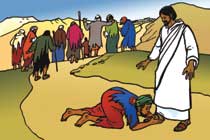
I’m sharing this with you because in our gospel today, Jesus is showing us that not only his influence or popularity is reaching to everyone but also, and in fact, more of his mercy for everyone. His love and mercy reach out to all people, rich or poor, man or woman, old or young, child or adult, healthy or sick. “The Lord has revealed to the nations his saving power”, so the Psalmist sings. And the ten lepers cured by Jesus as we heard in the gospel today could attest to this.
The Good News for us is that God wants us to realize and to experience the beauty of his love and mercy. But how we can experience this?
First be humble. We need to humble ourselves before God. It is a big call, because this means we need to face the truth of who we are, what we are capable of, what are our limitations. It is even a big challenge to face for us who are in the position of authority. We need to learn from the humility of Jesus, “who came not to be served but to serve” (Mk 10:45). This is a struggle for Naaman, a man of great authority as we heard in our First Reading today. Despite his high position, and presumably his ‘security’ or insurance, he was helpless with regards to his disease- leprosy. He couldn’t do anything about it. So he sent his servants to go to Prophet Elisha and pray for his healing. In return, he was told to go and wash himself in the Jordan. But he was angry because one, somebody dared to tell him what to do when he must have been the one giving the orders and two, it wasn’t what he’s expecting to happen. He said: ‘I thought that he would surely come out to me and stand and call on the name of the Lord his God, wave his hand over the spot and cure me of my leprosy.’ He was also upset because he was told to go to the place he didn’t like going at all. He said: ‘Are not Abana and Pharpar, the rivers of Damascus, better than any of the waters of Israel? Couldn’t I wash in them and be cleansed?’ But thank be to God for his servants who persuaded him to go. He humbled himself, he listened, he went and he was cured. To be humble, we need to learn how to listen to God speaking to us in many forms and ways, and then act on it. We need to start practicing it now because humility is the ladder to heaven, so we must start climbing it now if we really are serious in going to heaven.
Second be grateful. Someone once said: ‘One of the greatest sins in our time is ingratitude.’ How many gifts have we received from God? How grateful are we for them? We are not be like the other nine lepers who had immediately forgotten who had given them their health again. We must not take for granted the life that God generously gives us to live and to enjoy every moment, everyday. We are to be mindful always that God has given us a new life again, just as he has given new life to the lepers again. See, in Jesus’ time, lepers were practically ‘walking dead’. Physically their flesh are decaying. Psychologically, their dignity and value as human beings was just trampled, neglected, marginalized. We could just imagine their feeling of uselessness, ugliness and helplessness. Socially, they were considered outsiders, outcasts. They had to stand afar off and even acknowledge their presence to warn people saying ‘unclean! Unclean! Spiritually, they were feeling unlovable, unloved even by God himself because in their time they consider leprosy as a punishment from God for their sins. They’re dead but Jesus gave them life again. They should have been grateful for that, but only one turned back to express his gratitude to the person who turned his life around. Let us be thankful to God for everything we have received and for God who turned our life around.
Third, let us be aware of the ‘little’ people that God sometimes sent and used to help us. These are the people who at first glance might have little or even nothing to do with us at all. But despite their ‘littleness’ they could do something great for us. Few examples: the little boy who brought 5 loaves and two fish, which Jesus had blessed and divided and fed to 5 thousand and more; the widow who entered into the temple who gave her only silver coins to the offering; the servants of Naaman, who persuaded him to listen to the prophet’s words [if he hadn’t acted on it, he would never have been cured; the Samaritan leper in the gospel today who had to find his way back into the crowd to thank Jesus for his healing, and many others. These little people are oftentimes God’s way to show us He cares for us, He listens to us and He loves us still no matter who we are and where we’re from.
He wills that all of us be saved. And He wishes that we experience his acts of caring, of loving, and of saving us. We can experience this if we learn to be humble, to be grateful, and to be aware of the little people who might come our way bringing us great blessings and gifts from God. To really experience God and God’s presence in our lives, let us meet Him halfway.
3 ways to keep the faith alive
Homily for 27th Sunday in Ordinary time year C 2013
 I. ‘Jesus has done it again!’. I’m referring to the episode in our gospel today wherein Jesus has shown one of the remarkable ways on how he dealt with some requests or plea from his audience. In the gospel, we heard of his disciples asking him ‘to increase their faith’. Typical of him, he didn’t just give them what they are asking for, not because He can’t, but because their request hid a more pressing and important need to be attended to. Yes, they have recognized that their faith is a gift from God and He alone can ‘increase’ it, so they believed. Otherwise they wouldn’t have raised that ‘appeal’ to Jesus. However, Jesus could discern the real need of the disciples through the ‘appeal’ they made. Thus, when he was asked to ‘increase their faith’ he answered to them with sayings that brings out this message: Faith is not about quantity (i.e. how much or how little of it) but about quality (i.e. even if it is only a size of a mustard seed, it can motivate to do great things). It is not about how much faith we have, or how little. Rather it is about we keep our faith alive in our lives and in our hearts.

II. But first, we need to remember always that faith is a gift. We don’t earn it. God gives us this generously, because He loves to share with us his life and his love, and only through faith we can come to know, and experience, and enjoy this wonderful sharing of divine life with us.
III. So how can we keep the faith alive in our lives and in our hearts?
-
Our First Reading today gives us one way: Prayer- communication with God and looking for God and the actions of God’ in our real human experiences. This is one message of the Prophet Habbakuk for us as we heard in the First Reading today. We need to pray. We need to keep the line of communication open between us and God so that we could see him acting through our human experiences, even that experience of ‘oppression, injustice, frustration, violence’, etc. that Prophet Habbakuk noted. And we need to pray constantly and to keep in touch with God about how we are going and where we are heading to. Furthermore, we need to remind ourselves though that God always answers our prayers. It is only that some answers were not the answer we are expecting. But let us be assured of this. He loves us so much, he cares for us, and he knows what’s best for us. Let us just be patient and continue to live with hope and with faith.
-
Our Second reading today gives us another way to keep our faith alive- that is to ‘fan into a flame the gift that God gave’ us as St Paul would say. St Paul understood that the gift of God to us which includes faith is like an ember, and to keep it burning we need to fan it and make it enflamed by the Spirit of God. St Paul here outlined some ways to fan into a flame the gift of God: ‘love, self-control, courage to witness the faith and not be ashamed of standing up for Christ, bear hardships for the sake of the gospel, and rely on the power of God. Maybe we can learn from the examples of the two neighbours of mine in the Philippines. These two married women worked as volunteer Catechists in our state school. They took their commitment seriously by sacrificing a lot of themselves, of their time to help the children learn about the faith. Every Sunday, they attend Mass even if they had to walk for two hours or more to get to our parish Church. I just admired the commitment of these two ladies, because I often passed them by walking to and from the Church, while I am on a public transport. I assumed they just didn’t have money to pay for the fare or they just reserved their money for more important and urgent need, so everytime I passed them by, I just asked the driver to stop and gave them a bit of money enough for them to get a public transport. It just amazed me how much faith meant for them that they kept up witnessing for it no matter what or no matter how long will it take them to get to the Church. These are just few of the many people of faith around us from whom we can learn from and imitate the way they fan into flame the gifts that God has given us.
-
Our Gospel today also gives us another way to keep the gift of faith alive in us- that is to trust that no matter how small it is, it can do wonderful things, if empowered by God’s grace, we use it in the right, in the proper and in the informed way. And we can make it real in our lives, by fulfilling our duties as servants of God and of the gospel ‘faithfully and responsibly.’ For instance, we have the duty to ‘be our brothers/sisters’ keepers, so we do this by sharing our resources to them. Last year in my previous parish, we encouraged parishioners to give stuff for some poor people in the Philippines. We received many things including beautiful dinner sets that were rarely used or not even used at all by the owners. We gave them to some 12 poor families in my neighbouring village in the Philippines. And they were so happy because that’s the first time they have dinner sets that they could use for special occasions, like weddings or birthday, etc. Faith is in a way like that. It is beautiful but we can only see the real beauty of it when we share it, when we express it in our lives, when we really live it out in our lives. Small it may be for us, but it means a lot, and it can do great and wonderful things. IV. So as we continue our celebration of the mass today, let us thank God for the gift of faith. Let us also pray for God’s grace to help us focus on the quality of our faith rather than on the quantity. Then let us resolve to express our faith in our lives, in our homes, in our workplaces, in the people we meet, and in any opportunities that may come our way. Amen.
Dialogue with God
Blogger’s note: I found this amazing way of meditating on, reflecting on and praying of
The Lord’s Prayer
by Flor McCarthy SDB
Author’s note for effects: The Most effective way of presenting this dialogue is as follows. Choose a stranger, or at least un unfamiliar voice, to play the part of God. Provide him with a microphone, and keep him out of sight. The person praying is at the Lectern. The words in italics are to be emphasised.
Me: Our Father, who art in heaven.
God: Yes.
Me: Did I hear a voice?
God: You did.
Me: Just as soon as I began to pray somebody interrupts me. I’d better start again. Our Father, who art in heaven.
God: Yes.
Me: You’ve interrupted me again.
God: But you called me. You said: ‘Our Father, who are in heaven.’ So here I am.
Me: Oh my God!
God: You sound surprised.
Me: Frankly, I’m very surprised. I didn’t really expect you to answer.
God: Oh, so that’s all the faith you have in me. Anyhow, now that we’ve made contact, what’s on your mind?
Me: To be quite honest, I haven’t given it much thought. I say the ‘Our Father’ every now and then. It makes me feel good.
God: Oh, so that’s what prayer is for- to make you feel good. I see, go on.
Me: Hallowed be thy name.
God: Hold it! What do you mean by ‘hallowed’?
Me: It means…Let me see…Hallowed?…Hallowed?…Good heanves, I don’t know what it means.
God: Do you normally use words you don’t understand when you’re talking to people?
Me: No.
God: Well then, why do you do so when you’re talking to me? After all, that’s what prayer is- a conversation between me and you.
Me: Good point, Lord. By the way, what does the word mean?
God: It means ‘may it be honoured’ or ‘may it be seen as holy’.
Me: So what I’m really praying for is that your name might be honoured by everybody.
God: That’s the general idea.
Me: May I go on now?
God: By all means.
Me: Thy Kingdom come.
God: What kind of kingdom have you in mind?
Me: I’m not sure. All I know is that the world is in a mess.
God: What kind of world would you like to see?
Me: I’d like to see everyone living in peace.
God: Do you live in peace with everyone?
Me: Nearly everyone. However, there are a few people I’d like to strangle. There’s one neighbour whom I’d like to see emigrate to the North Pole.
God: But what about the trouble you cause? You’re no angel, you know.
Me: This is starting to hurt, Lord. Aren’t we taking a bit too seriously?
God: But you did pray for my kingdom come. So why not begin with yourself? You do want to belong to my kingdom, don’t you?
Me: I do, but I’m not sure what it involves.
God: Ordinary people help to spread my kingdom by being kind, truthful, honest, just, and so on. In a nutshell, by doing my will.
Me: Your will- that’s the next part of the prayer. May I go on then?
God: Certainly.
Me: Thy will be done on earth, as it is in heaven.
God: ‘On earth’ presumably means your life too?
Me: Of course.
God: Well then, what are you going to do about it?
Me: How do you mean what am I going to about it? Haven’t I just prayed about?
God: So you have. But I repeat: What are you going to do about it?
Me: Actually I wasn’t planning on doing anything.
God: Oh, so that’s how it is. You pray for my will to be done. Then you sit back, fold your arms, and do sweet nothing about it. Let’s be practical for a moment. When last did you put yourself out to help another person? And what about that tongue of yours?
Me: Stop, Lord! I’m no worse than anyone else. Still, I would like to be a better person.
God: Good! Things are beginning to look up. Praying could be dangerous you know.
Me: What do you mean?
God: If you took seriously you could end up a changed person. Continue please.
Me: [Looking at his watch] This is taking a lot longer than I expected. Normally I’m finished my prayers in two minutes flat. What’s worrying me is this: I’m supposed to meet someone at…[here name some well-known local pub] in five minutes. Couldn’t we finish this another time?
God: Finished in two minutes flat! Sounds like a rushed job to me. So you can’t wait. A minute ago you were praying for my will to be done. Now it’s your will that must be done.
Me: Oh, well, I suppose I might as well go on.
Give us this day our daily bread.
God: What are you praying for now?
Me: For bread- at least that’s what the prayer says, isn’t it?
God: Yes, but bread for whom?
Me: For myself of course.
God: For yourself? You don’t look undernourished to me. So what more do you want?
Me: Don’t get me wrong, Lord, I’m not complaining. I’m grateful for the many good things I have in my life. But I feel there is something missing. At times I feel very empty.
God: What you’re experiencing is a spiritual hunger.
Me: A spiritual hunger. I’m not sure I know what you mean.
God: A human being has a soul as well as a body. The soul too needs food.
Me: I see.
God: Let us get on then with the rest of the prayer. I’m very interested in the next part of it. [brief pause]. Well, aren’t you going on>
Me: I’m afraid of what you’ll say.
God: Why don’t you try me and see?
Me: Forgive us our trespasses, as we forgive those who trespass against us.
God: What about the mother-in-law?
Me: I knew you’d bring her up. Why, Lord, she’s the greatest b…b…bad person I’ve ever met. If only she’d mind her own business.
God: But what about your prayer. ‘As we forgive those who trespass against us’?
Me: Ah, Lord, be reasonable. Forgive her? Sure, I can’t even bear the sight of her. Boy, have I got plans for her. When I’m finished with her she’ll be sorry she ever crossed my path.
God: Oh, so it’s back to the old business of ‘an eye for an eye, and a tooth for a tooth.’ It’s a good thing everyone doesn’t think like you, or half of the world would be going around blind and toothless. I take it then that you’re not going to forgive her.
Me: Honestly Lord, I couldn’t promise you that.
God: And yet you expect me to forgive you. You’re not going to forgive her- is that final?
Me: That’s final.
God: Well then, for goodness sake go off to…[name same pub as above] and don’t be wasting my time.
Me: Don’t cut me off, Lord. Wait a minute. Are you still there, Lord? [no reply] Look’s as if I’ve been cut off. I wouldn’t mind but I was just going to say that maybe I can forgive her after all…I can…I will…are you there, Lord?
God: I am.
Me: Oh, good! You had me scared for a minute. I thought you’d cut me off.
God: I take it that you don’t like to be cut off.
Me: You bet I don’t.
God: Well that’s exactly what you do when you don’t forgive. You cut the other person off from you, and you cut yourself off from me. So you are willing to forgive her?
Me: I’ve already forgiven her.
God: Good, let’s go on with the prayer.
Me: Lead us not into temptation.
God: You know, that one always makes me smile.
Me: Why do you say that, Lord?
God: Tell me something. When did you need me, or anyone else for that matter, to take you by the hand and lead you into temptation? Do you not walk into it of your own accord and with both eyes open? I mean, no one puts an obscene book or magazine into our hand. No one forces you to take that extra drink.
Me: Stop, Lord, I’ve heard enough. I get your point. Yes, there are times when I bring temptation on myself. But then there are times when it comes to me unbidden.
God: True, but temptation isn’t necessarily a bad thing. It’s a chance for you to prove your loyalty and maturity.
Me: So what should I pray for?
God: Pray for the strength to avoid the temptations you can avoid, and to resist the ones you can’t
Me: Sounds like good advice.
God: You may go on now.
Me: Deliver us from evil.
God: What have you in mind?
Me: I had a friend who was killed in a car accident. And another who died of cancer while still young.
God: You’re not blaming me, are you?
Me: No, of course, not.
God: You know, I don’t want those kind of things to happen.
Me: Yet, when they happen, you hear people say: ‘It’s the will of God.’
God: It’s not my will that tragedies should happen.
Me: But could you not prevent them?
God: Your question is not one that can be answered in a few words. But let me say just this. I made the things of nature to follow the law of nature. I’ve got to respect that law. To people I gave the gift of free will. I’ve got to respect their freedom.
Me: Then you can’t guarantee me a life free from pain and struggle?
God: No, I couldn’t do that even for my own Son. However, there is something I will do.
Me: What is that?
God: I’ll help you to cope with whatever evil comes.
Me: Lord, even if I have to walk through the valley of darkness, I will fear no evil as long as you are with me.
God: Oh, I’ll be with you alright. You can count on that.
Me: I will. Thank you, Lord. I’ve finished. That’s the end of my prayer.
God: We’ve had quite a chat.
Me: We sure had.
God: Many people say prayers rather than pray. Now if in the course of our chat I’ve pointed out some of your faults, it’s because I care about you. I want you to be a better and a happier person. You can go now. But just remember this: In spite of all I said, I still love you just as you are.
Me: Just as I am? Faults and all? Do you really mean that, Lord?
God: I do. I trust I’ll be hearing from you again soon?
Me: You certainly will.
God: Well then, let’s say ‘Amen’.
Amen (together)
 Junjun FAITHBOOK